CBAM Billet Production: Optimizing Reheating Furnace Emissions for Export Markets
The global steel industry has entered a new era of environmental accountability. As of January 1, 2026, the European Union's Carbon Border Adjustment Mechanism (CBAM) has transitioned from a reporting exercise into a live financial liability. Steel exporters across Asia, particularly in fast-growing manufacturing hubs like Vietnam and India, must now pay a carbon price at the EU border equivalent to the domestic EU Emissions Trading System (ETS) price.
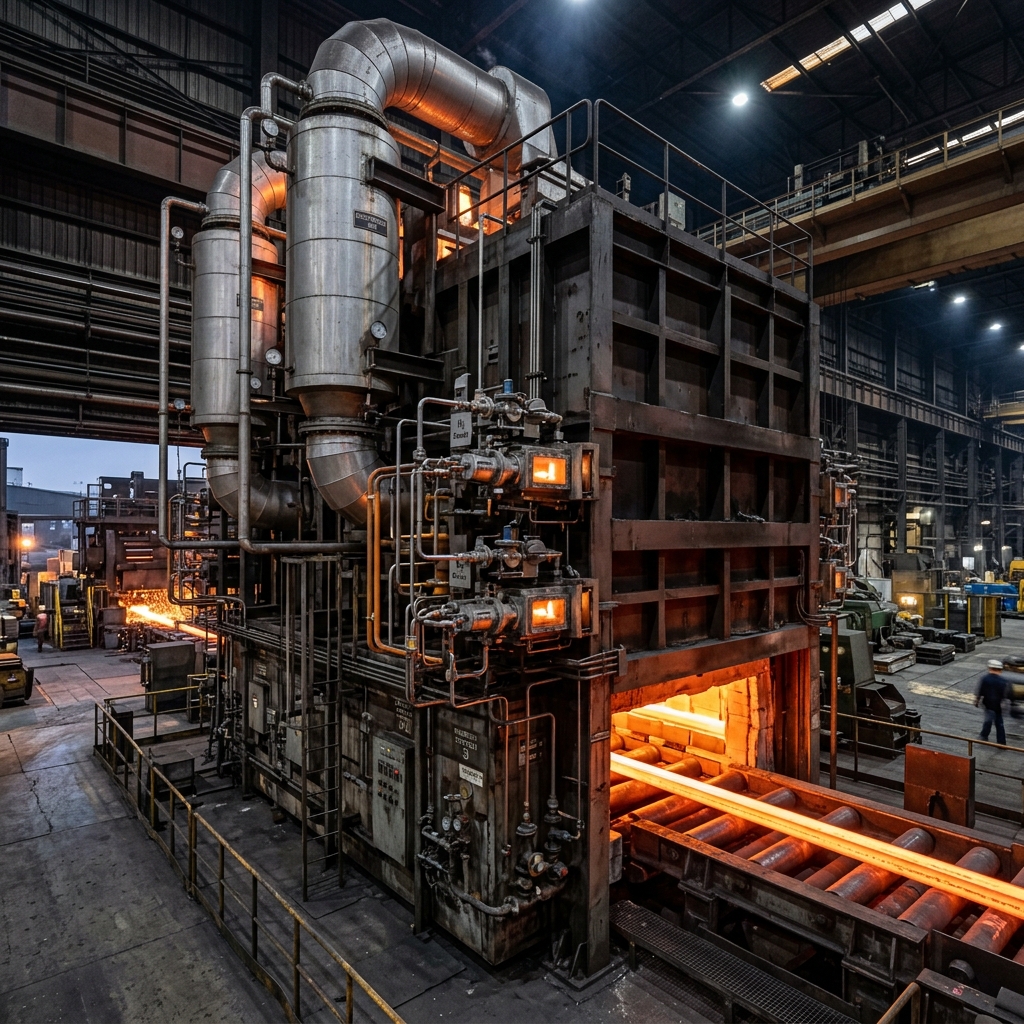
For rolling mills producing billets, wire rods, and structural steel for export, the reheating furnace represents the primary source of direct greenhouse gas emissions (Scope 1). Accounting for over 80% of a rolling mill’s direct carbon footprint, the efficiency of this thermal process now directly dictates market competitiveness. Operating an inefficient furnace no longer just increases fuel bills—it triggers punitive carbon tariffs that can render exports economically unviable.
This technical guide analyzes how steel exporters can optimize reheating furnace thermal efficiency, reduce embedded emissions, and establish the robust, audit-ready data tracking systems required to maintain access to premium global markets.
Regional Strategy: How do trade policies and energy transitions affect furnace retrofits across ASEAN? Read our comparison of Vietnam and Indonesia: ASEAN Steel Energy Efficiency: Vietnam & Indonesia Reheating Furnace Roadmap →
Reheating Furnace Performance & CBAM Impact Comparison
The table below compares the thermodynamic parameters and corresponding carbon tariff exposure of a legacy reheating furnace against one optimized to South Technology’s T80 energy-efficiency standards.
| Technical & Tariff Parameter | Legacy Reheating Furnace (Baseline) | Optimized Reheating Furnace (T80 Standard) | CBAM & Operational Impact |
|---|---|---|---|
| Specific Fuel Consumption (SFC) | 380,000 – 440,000 kcal/tonne | 320,000 – 340,000 kcal/tonne | Direct fuel cost reduction of 12% to 15% |
| Combustion Air Temperature | Ambient (30°C – 40°C) | Preheated (400°C – 450°C) | Reduces fuel gas required to reach flame temperature |
| Excess Oxygen Level (Flue Gas) | 5.5% – 7.5% (unregulated) | 1.8% – 2.2% (stoichiometric PLC control) | Eliminates waste heat carried away by excess air |
| Direct Scope 1 CO₂ Emissions | 0.082 – 0.095 tCO₂/tonne steel | 0.068 – 0.073 tCO₂/tonne steel | Reduces embedded carbon intensity by 15% to 20% |
| Reporting Data Baseline | Estimated / Default values | Actual measured & logged data | Avoids 10%–30% default value tariff surcharges |
| Billet Scale Loss Rate | 1.6% – 1.8% | 1.0% – 1.2% | Saves 4 to 6 kg of steel yield per tonne rolled |
| Upfront Capital Expense (CAPEX) | — | Zero CAPEX (Energy Steward Model) | Shuts down financial entry barriers for operators |
1. The CBAM Reality and the Threat of Punitive Default Values
-
The Problem:
Many steel mills outside the EU have historically relied on simplified carbon reporting or estimated emissions figures. Under the definitive CBAM regulations starting in 2026, exporters who fail to provide verifiable, plant-specific emissions data will be assigned "default values" by EU customs. These default values are set to the worst-performing 10% of EU installations and are scheduled to increase by 10% in 2026, 20% in 2027, and 30% from 2028 onward. Relying on default figures introduces a massive financial penalty, artificially inflating the carbon tax paid on imported billets. -
The Technical Principle:
To bypass punitive default values, steel mills must transition to "actual emissions reporting." This requires establishing a continuous, verifiable log of all fuel gas and oxygen inputs relative to net billet output. According to the World Steel Association guidelines, Scope 1 emissions must be calculated based on the lower heating value (LHV) of the specific fuel mix burned. Implementing digital flow meters with temperature and pressure compensation allows mills to log exact gas consumption and generate the audit-ready data packages required by EU verifiers. -
FAQ Q&A:
Why does relying on default values pose a financial risk under CBAM?
Relying on default emissions values under CBAM is commercially risky because the EU assigns punitive default rates based on the worst-performing 10% of EU installations. In 2026, these default values will increase by 10%, rising to 20% in 2027, and 30% from 2028 onward, inflating the tariff burden and making exporters uncompetitive compared to those with verified, optimized data. -
Case Results:
An audit conducted for a structural steel exporter showed that switching from CBAM default values to actual verified emissions data reduced their calculated carbon liability by 18%. This data verification, combined with physical furnace upgrades, saved the exporter an estimated USD 12 per tonne in CBAM certificate costs, preserving their export margins into Germany and the Netherlands.
"Under the definitive CBAM regime, carbon data is just as important as steel quality. Exporters who cannot prove their actual emissions profile will be priced out of the European market by default value penalties."
— Dr. Chen Wei, Chief Thermal Engineer, South Technology
Carbon Border Adjustment Mechanism (CBAM)
A carbon tariff imposed by the European Union on carbon-intensive imports to prevent carbon leakage. Starting in 2026, importers must purchase CBAM certificates corresponding to the embedded carbon emissions of imported goods like steel, aluminum, and cement, pricing carbon emissions equivalently to the EU Emissions Trading System (ETS).
2. Reheating Furnace Heat Loss and Scope 1 Carbon Footprint
-
The Problem:
Reheating furnaces are highly energy-intensive, operating at internal temperatures exceeding 1200°C. In legacy pusher-type or walking beam furnaces, significant thermal energy is wasted. The largest source of energy loss is the hot flue gas escaping through the exhaust stack, which accounts for 35% to 45% of total fuel energy input. Additional losses occur through water-cooled skid pipes, structural radiation, and heat carried away by excess combustion air. Every kilocalorie of heat that escapes unutilized represents wasted fuel and unnecessary carbon dioxide emitted into the atmosphere. -
The Technical Principle:
To minimize Scope 1 emissions, engineers must analyze the furnace's heat balance. The primary objective is to maximize thermal efficiency—the ratio of heat absorbed by the steel billets to the total chemical energy of the fuel input. By reducing waste heat losses, the furnace requires less fuel gas to heat each tonne of steel to rolling temperature. This directly lowers the Specific Fuel Consumption (SFC) and proportionally reduces the volume of CO₂ generated per tonne of billet produced. -
FAQ Q&A:
Can a steel mill use green electricity to fully eliminate its CBAM liability?
No. While purchasing green electricity under Direct Power Purchase Agreements (DPPAs) can reduce Scope 2 indirect emissions, the steel reheating process relies on fossil fuels (natural gas, heavy oil, or coke oven gas) to reach rolling temperatures (1150°C - 1250°C). These Scope 1 direct emissions remain the dominant contributor to a billet's carbon footprint and can only be reduced through thermal efficiency upgrades. -
Case Results:
Thermodynamic modeling of a legacy 80-tonne-per-hour walking beam furnace running on natural gas indicated that its thermal efficiency was only 44%. Flue gas exited the furnace chamber at 830°C. Over a 12-month period, venting this waste heat directly into the atmosphere resulted in over 4,500 tonnes of excess CO₂ emissions compared to modern T80 energy-efficiency benchmarks.
"A reheating furnace is a thermodynamic system where every leak and radiation loss translates directly to carbon taxes. Upgrading thermal retention is the first step toward carbon compliance."
— Dr. Chen Wei, Chief Thermal Engineer, South Technology
Technical Blueprint: Learn how to address heat loss in legacy furnace designs and identify thermal bypasses. Read our guide: How Vietnam Steel Mills Can Reduce Heat Loss in Legacy Reheating Furnaces →
3. Upgrading to High-Efficiency Recuperators for Waste Heat Recovery
-
The Problem:
Many older reheating furnaces utilize single-pass metallic recuperators that have degraded due to high-temperature oxidation and thermal fatigue. As recuperator tubes crack, combustion air leaks into the flue gas stream. This lowers the preheat temperature and forces the combustion air fan to run at higher loads, wasting energy. In some mills, the recuperator is bypassed entirely because of structural failures, forcing the furnace to operate on ambient-temperature combustion air, which increases gas consumption by up to 15%. -
The Technical Principle:
Upgrading to a high-efficiency multi-pass metallic recuperator captures the heat from the exhaust flue gas and transfers it to the incoming combustion air. Preheating the combustion air to between 400°C and 450°C returns valuable thermal energy directly to the combustion chamber. This preheated air increases the flame temperature and accelerates combustion, allowing the burners to reach the desired zone temperatures while consuming significantly less natural gas.
Incoming Cold Air (30°C) ──> [ Multi-Pass Recuperator ] ──> Preheated Air (450°C) ──> Burners
                                       ▲
                                       │ (Heat Exchange)
Hot Flue Gas (800°C) ──────────────────┘
-
FAQ Q&A:
How does waste heat recovery directly affect a steel mill's CBAM financial liability?
Waste heat recovery directly reduces fuel gas consumption per tonne of steel produced. Because natural gas combustion represents the primary source of Scope 1 direct emissions in rolling mills, a 10-15% fuel saving translates directly into a corresponding 10-15% reduction in embedded carbon dioxide emissions, lowering the number of CBAM certificates required at the EU border. -
Case Results:
By replacing a degraded heat exchanger with a custom-engineered double-pass metallic recuperator, a hot rolling mill in northern Vietnam raised its combustion air preheat temperature from 150°C to 430°C. This upgrade achieved a verified 11.2% saving in specific natural gas consumption, reducing their Scope 1 emissions intensity by 0.012 tCO₂ per tonne of steel rolled.
"A modern recuperator is a passive carbon reduction engine. By returning waste thermal energy to the furnace, we achieve double-digit fuel savings without changing the production schedule."
— Zhang Liang, Senior Process Engineer, South Technology
📋 Combustion Efficiency Checklist
Are you preparing your steel mill for CBAM compliance? Download our technical checklist to review layout space requirements, burner settings, and waste heat recovery parameters.
Download Free Guide → | View Case Studies →
4. Dynamic Combustion Optimization and Excess Oxygen Control
-
The Problem:
Legacy combustion control systems typically regulate the fuel-to-air ratio using mechanical linkages or fixed ratio curves. These systems are unable to compensate for variations in ambient air density, humidity, or fuel gas pressure. To prevent incomplete combustion and black smoke, operators usually set the system to run with substantial excess air, resulting in stack oxygen (O₂) levels of 6% to 8%. This excess air acts as a thermal sink, absorbing combustion heat and carrying it out the stack, while also accelerating billet oxidation (scale loss). -
The Technical Principle:
AI-driven smart combustion control utilizes real-time feedback from zirconium oxide (ZrO₂) oxygen sensors installed in the flue gas stream of each furnace zone. A programmable logic controller (PLC) running a closed-loop tuning algorithm continuously micro-adjusts the combustion air dampers. The system maintains excess oxygen levels tightly between 1.5% and 2.0%. This stoichiometric combustion minimizes the volume of hot flue gas, reduces scale loss on the billet surface by limiting oxygen exposure, and improves temperature uniformity across the heating zones. -
FAQ Q&A:
What is the role of continuous monitoring in CBAM verification audits?
CBAM audits require traceable, third-party verified evidence of actual production energy inputs. Continuous monitoring systems, integrating zirconium oxide oxygen sensors and flow meters linked to a secure PLC, provide the high-granularity, tamper-proof logs necessary to verify Specific Fuel Consumption (SFC) and satisfy EU auditor requirements. -
Case Results:
Integrating zone-by-zone stoichiometric control on a walking beam furnace reduced stack oxygen levels from 6.2% to 1.9%. The upgrade delivered a 4.5% reduction in fuel gas usage. Additionally, scale loss was reduced from 1.6% to 1.1%, saving approximately 5 kilograms of steel per tonne rolled and directly improving the mill's operating yield.
"Precision combustion control is where chemical engineering meets digital automation. Micro-adjusting air-to-fuel ratios zone-by-zone allows us to simultaneously cut fuel costs and reduce billet scale loss."
— Dr. Chen Wei, Chief Thermal Engineer, South Technology
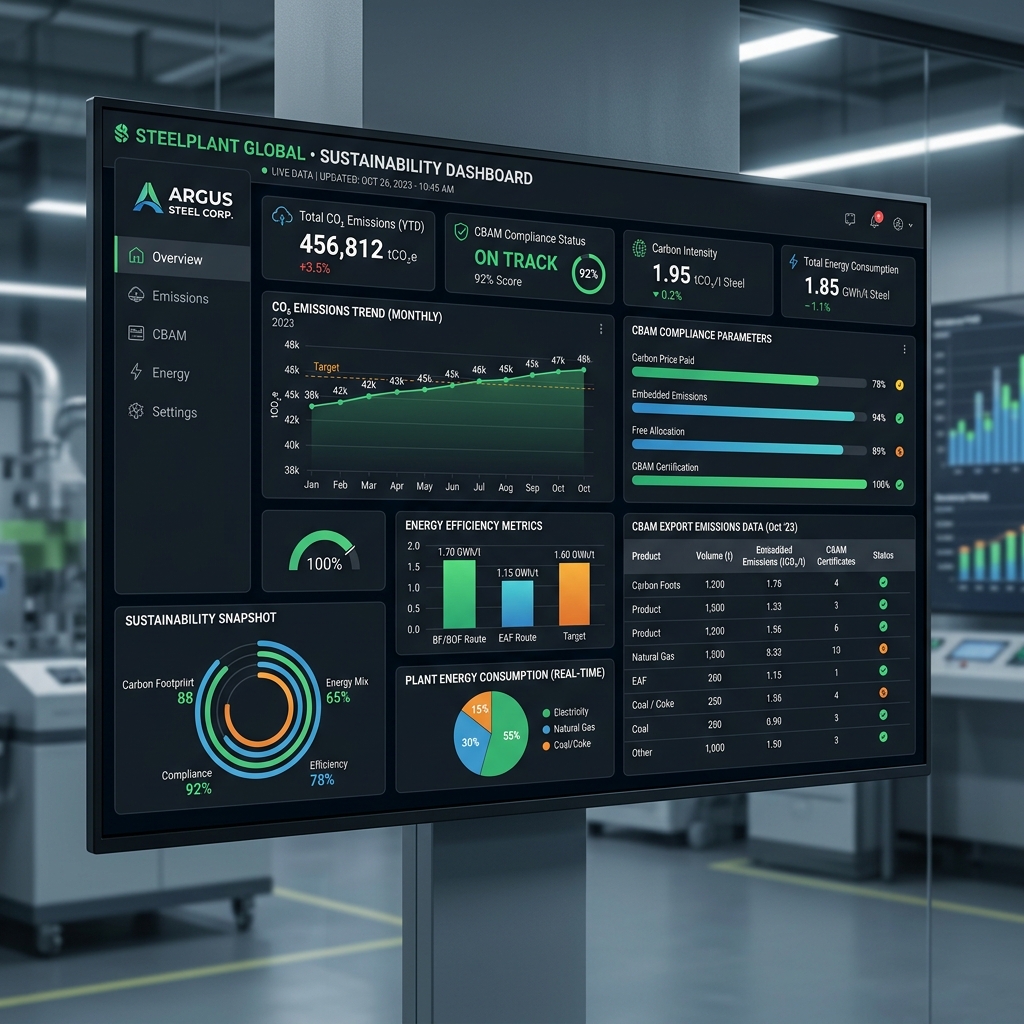 Figure 1: AI-driven combustion control and emissions dashboard showing real-time carbon intensity and excess oxygen metrics.
5. Performance-Based Funding: Shifting Compliance Risks with Zero CAPEX
-
The Problem:
Upgrading a reheating furnace with high-efficiency recuperators, modern burner control valves, and advanced PLC instrumentation typically requires an upfront capital investment of USD 250,000 to USD 455,000. For many steel producers, allocating this capital is challenging, especially when dealing with high raw material costs or market volatility. The risk of performance shortfalls or delayed returns often leads to the postponement of critical efficiency upgrades. -
The Technical Principle:
The Energy Steward Model addresses this barrier by eliminating upfront CAPEX requirements. Under this performance-based contract, South Technology finances, engineers, installs, and maintains the entire furnace optimization system. The investment is recovered over a multi-year term solely through a shared portion of the verified monthly energy savings. Savings are measured and verified against the pre-upgrade baseline using the International Performance Measurement and Verification Protocol (IPMVP). If no savings are achieved in a given month, the steel mill pays nothing. -
FAQ Q&A:
How does the Zero CAPEX model work under the Energy Steward framework?
EcoReheating deploys all hardware, software, and engineering at zero upfront cost. The steel mill pays only a share of verified energy savings, measured against an agreed baseline. If there are no savings, there is no payment. This model aligns the incentives of the technology provider and the operator while eliminating project risk. -
Case Results:
A steel manufacturer exporting wire rods to Europe partnered with South Technology to upgrade their reheating furnace under the Energy Steward Model. With zero upfront capital, the mill received a new double-pass recuperator and AI combustion controls. The project achieved a verified fuel reduction of 12.4%, generating USD 38,000 in monthly gas savings. The mill retained 50% of the savings from day one, improving cash flow and achieving CBAM compliance without capital risk.
"The Energy Steward Model aligns incentives perfectly. We invest our own capital because we are confident in our thermodynamic engineering. We only succeed when our clients save fuel."
— Li Minghua, Project Director, South Technology
Geopolitical Compliance & Risk Mitigation Disclaimer
The information presented in this article regarding the European Union's Carbon Border Adjustment Mechanism (CBAM) and associated emissions reporting requirements is compiled from public regulatory documents for educational and informational purposes. While the thermal optimization technologies described (including recuperator retrofits and AI-driven combustion control) have historically achieved fuel savings between 7% and 15% across global installations, actual energy savings, emissions reductions, and policy compliance outcomes are site-specific. Performance depends on the furnace’s physical condition, baseline operating practices, steel grades rolled, and local gas quality. EcoReheating does not guarantee fixed fuel reduction percentages, specific financial returns, or automatic regulatory compliance certification. Exporters are advised to consult accredited CBAM verifiers for official compliance audits.
Partner with the Zero CAPEX Energy Steward
Optimize your reheating furnace efficiency, reduce your Scope 1 emissions, and protect your export margins from CBAM tariffs without capital risk. Our engineers will audit your current furnace performance and design a custom CISA T80-standard roadmap.
No upfront CAPEX required. Baseline audits are completed with minimal production downtime.
Dr. Chen Wei
Chief Thermal Engineer, South Technology
Dr. Chen Wei is the Chief Thermal Engineer at South Technology, specializing in industrial thermodynamics, high-temperature heat recovery, and combustion optimization. He has over 20 years of experience designing and retrofitting reheating furnaces for major steel mills across Asia.
Quick ROI Estimator
See how much you could save using our Energy Steward Model
Based on typical 11% fuel efficiency optimization.
Get Verified ROI AuditFrequently Asked Questions
Q.Why does relying on default values pose a financial risk under CBAM?
Relying on default emissions values under CBAM is commercially risky because the EU assigns punitive default rates based on the worst-performing 10% of EU installations. In 2026, these default values will increase by 10%, rising to 20% in 2027, and 30% from 2028 onward, inflating the tariff burden and making exporters uncompetitive compared to those with verified, optimized data.
Q.How does waste heat recovery directly affect a steel mill's CBAM financial liability?
Waste heat recovery directly reduces fuel gas consumption per tonne of steel produced. Because natural gas combustion represents the primary source of Scope 1 direct emissions in rolling mills, a 10-15% fuel saving translates directly into a corresponding 10-15% reduction in embedded carbon dioxide emissions, lowering the number of CBAM certificates required at the EU border.
Q.Can a steel mill use green electricity to fully eliminate its CBAM liability?
No. While purchasing green electricity under Direct Power Purchase Agreements (DPPAs) can reduce Scope 2 indirect emissions, the steel reheating process relies on fossil fuels (natural gas, heavy oil, or coke oven gas) to reach rolling temperatures (1150°C - 1250°C). These Scope 1 direct emissions remain the dominant contributor to a billet's carbon footprint and can only be reduced through thermal efficiency upgrades.
Q.What is the role of continuous monitoring in CBAM verification audits?
CBAM audits require traceable, third-party verified evidence of actual production energy inputs. Continuous monitoring systems, integrating zirconium oxide oxygen sensors and flow meters linked to a secure PLC, provide the high-granularity, tamper-proof logs necessary to verify Specific Fuel Consumption (SFC) and satisfy EU auditor requirements.
Dr. Chen Wei
Chief Thermal Engineer, South Technology
Dr. Chen Wei is the Chief Thermal Engineer at South Technology, specializing in industrial thermodynamics, high-temperature heat recovery, and combustion optimization. He has over 20 years of experience designing and retrofitting reheating furnaces for major steel mills across Asia.